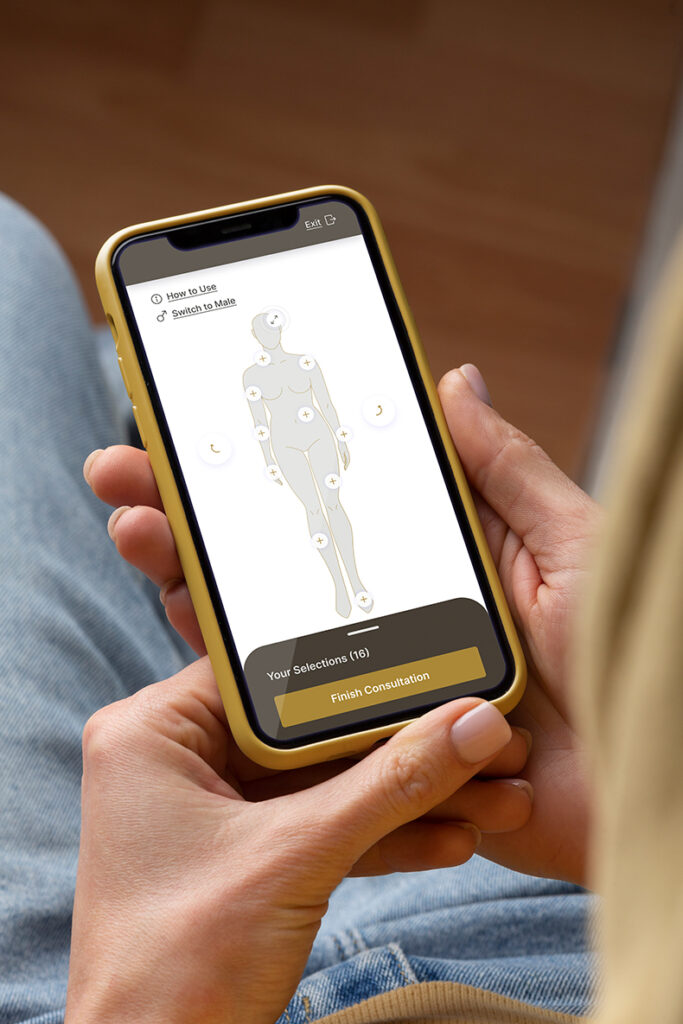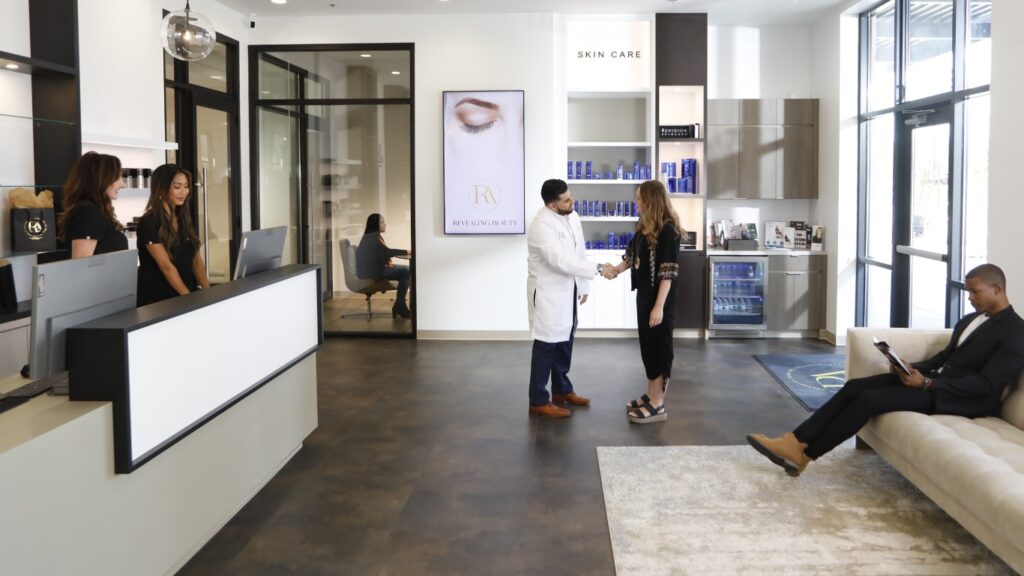
Your first med spa visit should begin with a health and goals assessment, not an immediate procedure. At a physician-directed clinic, expect medical screening, photographs or skin analysis when appropriate, an explanation of options and risks, transparent pricing, informed consent, and a personalized plan. You should have time to ask questions and no pressure to treat the same day.
What happens at a first med spa visit?
A high-quality first visit is a consultation before it is a treatment. The team should learn what you want to improve, review your medical history, examine the relevant area, explain reasonable options, and make sure you understand benefits, limitations, cost, recovery, and risk.
Renova Aesthetics is a physician-led medical aesthetics and wellness clinic in Carmel, Indiana. Medical treatments are provided within a physician-directed model, and a Good Faith Examination is completed when required. The goal is not to sell the longest list of services. It is to build a plan that fits the client’s anatomy, skin, health, timeline, and preference for natural results.
If you are searching “med spa near me” for the first time, the following framework can help you recognize a thoughtful visit.
Step 1: Share the concern in your own words
You do not need to arrive knowing the name of a treatment. In fact, leading with a concern often produces a better plan than requesting a device you saw online.
You might say:
- “My skin looks uneven after years of sun exposure.”
- “I want my expression lines to look softer, but I still want movement.”
- “My lower face feels less defined.”
- “I am interested in body contouring without surgery.”
- “I want a facial that helps with congestion and hydration.”
- “I have an event in six weeks and need realistic options.”
The provider should ask what bothers you, what does not bother you, how much change you want, how much downtime you can accept, and when you hope to see results. Those answers shape the plan.
Step 2: Complete medical screening
Medical aesthetics still involves medicine. A health review may include:
- Current conditions and recent symptoms
- Prescription and over-the-counter medications
- Supplements
- Allergies
- Pregnancy or breastfeeding
- History of cold sores, poor healing, pigment changes, or scarring
- Autoimmune, bleeding, neurologic, or neuromuscular conditions
- Prior cosmetic procedures, surgery, implants, filler, threads, or energy treatments
- Upcoming dental work, travel, events, or medical procedures
Be complete even when a detail seems unrelated. Blood thinners can affect bruising. A history of cold sores may change laser planning. Prior filler can influence treatment around the eyes or cheeks. Implanted electronic devices can affect candidacy for some body or radiofrequency treatments.
A reputable clinic protects your privacy and explains why the information matters.
Step 3: Receive a focused assessment
Assessment should match the concern. For facial aging, the provider may examine skin quality, muscle movement, bone support, fat pads, and balance. For pigment or redness, the provider may evaluate color, pattern, sun exposure, medications, and skin type. For body contouring, the discussion may include muscle, pinchable fat, visceral fat, laxity, prior surgery, and overall health.
Renova may use VISIA skin analysis to document features such as spots, texture, pores, redness, and UV-related changes. Imaging can reveal patterns that are difficult to judge in bathroom lighting and can create a baseline for tracking.
A device should not be recommended simply because the clinic owns it. Renova’s technology portfolio includes BBL HEROic, MOXI, HALO, ProFractional, RF microneedling, three HydraFacial machines, and body-contouring platforms. The advantage of a broad menu is the ability to select, sequence, or combine treatments based on the problem.
Step 4: Discuss options and tradeoffs
Every treatment has tradeoffs. A good consultation makes them easy to compare.
Ask about:
- What the treatment can realistically improve
- What it cannot improve
- How many sessions may be needed
- When results begin and when they mature
- How long results tend to last
- Expected discomfort and visible recovery
- Common side effects and serious risks
- Home care before and after
- Alternatives, including doing nothing
- Total cost and likely maintenance
For example, a HydraFacial can provide cleansing, exfoliation, extraction, and hydration with little downtime, but it does not create the same collagen remodeling as RF microneedling. Dysport can soften movement-related lines, but it does not replace volume. HALO can address texture and sun damage, but it requires more recovery and sun planning than a light facial.
The right recommendation aligns the treatment mechanism with the concern.
Step 5: Build a sequence, not a shopping list
Many clients have more than one goal. Treating everything at once is not always safe, comfortable, or financially sensible.
Renova is a leader in STAX, its approach to thoughtfully combining or sequencing therapies. A plan may pair technologies that address different layers of the skin, or it may separate services to protect healing. For example, BBL HEROic may be selected for pigment and redness while MOXI supports tone and texture. A neuromodulator may be timed before or after another service based on the treatment area.
A phased plan can identify:
- The highest-priority concern
- The treatment that creates the strongest foundation
- The interval needed for healing and evaluation
- Supporting home care
- Maintenance after the initial series
This format gives clients control over pace and budget.
Step 6: Review informed consent and pricing
Before treatment, you should know what is being used, who will perform the service, and what the expected financial commitment is. Pricing may be based on area, device, time, product, dose, or number of sessions.
For injectables, ask whether the quote is by syringe, vial, or treatment plan. Remember that Dysport and Botox units are not interchangeable. For laser or body treatments, ask what areas and follow-up are included. For packages, ask about expiration, cancellation, and what happens if the treatment is no longer medically appropriate.
Informed consent is not a signature alone. It is a conversation about foreseeable risks, alternatives, and what to do if a concern develops.
Do you have to receive treatment that day?
No. A consultation can stand on its own.
Some simple treatments may be appropriate on the same day after screening, consent, and adequate decision time. Other services require preparation, medical clearance, medication planning, sun avoidance, or a separate appointment. A client should never feel pressured to make an immediate decision because of a limited-time offer.
Taking time is especially reasonable for first-time injectables, aggressive resurfacing, under-eye treatment, or a complex combination plan.
What should you bring?
Bring or prepare:
- A current medication and supplement list
- Details of previous treatments and approximate dates
- Product names or records for prior filler or neuromodulator when available
- Photos that show the concern in different lighting, if helpful
- Your event or travel calendar
- Your skincare routine or clear photos of product labels
- Questions about recovery, cost, safety, and maintenance
Arrive with clean skin when instructed. Avoid making medication changes unless the prescribing clinician has approved them.
How do you judge med spa quality?
A beautiful lobby is not a safety credential. Consider whether the clinic provides:
- Physician direction and appropriate medical examinations
- Licensed, trained professionals working within scope
- Device and product transparency
- Before-and-after photography with consistent lighting
- Clean treatment rooms and infection-control practices
- Emergency planning
- Realistic claims
- Clear aftercare and follow-up
- Ongoing advanced education
- Respect for a client who chooses not to proceed
Renova’s team completes advanced training each year. The practice is a leading Sciton provider in Indiana, a top 1% Galderma injectable provider nationwide, and home to three HydraFacial machines. Those distinctions are most meaningful when they translate into informed treatment selection, repetition, safety systems, and reliable follow-up.
What happens after treatment?
You should leave with written or accessible instructions. The clinic should explain expected changes, when to call, when to seek urgent care, when to resume skincare or exercise, and when to return.
Photos and VISIA analysis can make follow-up more objective. Some outcomes are visible quickly, while collagen remodeling, pigment clearance, and body-contouring changes evolve over weeks or months. A responsible provider evaluates at the right interval instead of declaring success too early.
Your first visit should create clarity
The best result of a first med spa appointment is a clear, realistic plan, even when no procedure is performed. When comparing a “med spa near me,” look for clinical judgment, transparent tradeoffs, advanced training, and respect for your pace. Renova Aesthetics in Carmel, IN welcomes first-time clients who want education before treatment.
Frequently asked questions
What should I expect at my first med spa appointment?
Expect a goals discussion, medical history review, focused assessment, explanation of options, transparent pricing, informed consent, and a personalized plan. Treatment may or may not occur the same day.
What should I wear or bring to a med spa consultation?
Wear comfortable clothing and bring a medication and supplement list, prior treatment details, your skincare routine, and your event or travel calendar. Follow any clinic instruction about arriving with clean skin.
Do I need to know which treatment I want?
No. Describe the concern, desired amount of change, timeline, and downtime tolerance. The provider should identify which treatment mechanism best matches the problem.
Can I receive treatment at my first visit?
Sometimes, after medical screening and informed consent. Other treatments require preparation, a separate appointment, medical clearance, or more decision time. You should never feel pressured to treat immediately.
How do I choose a safe med spa near me?
Look for physician direction, licensed providers, medical screening, transparent devices and products, realistic claims, written aftercare, follow-up, emergency planning, and ongoing advanced training.
Where is Renova Aesthetics located?
Renova Aesthetics is a physician-led medical aesthetics and wellness clinic in Carmel, Indiana. The clinic serves clients seeking natural-looking injectable, laser, facial, body, and wellness treatments.