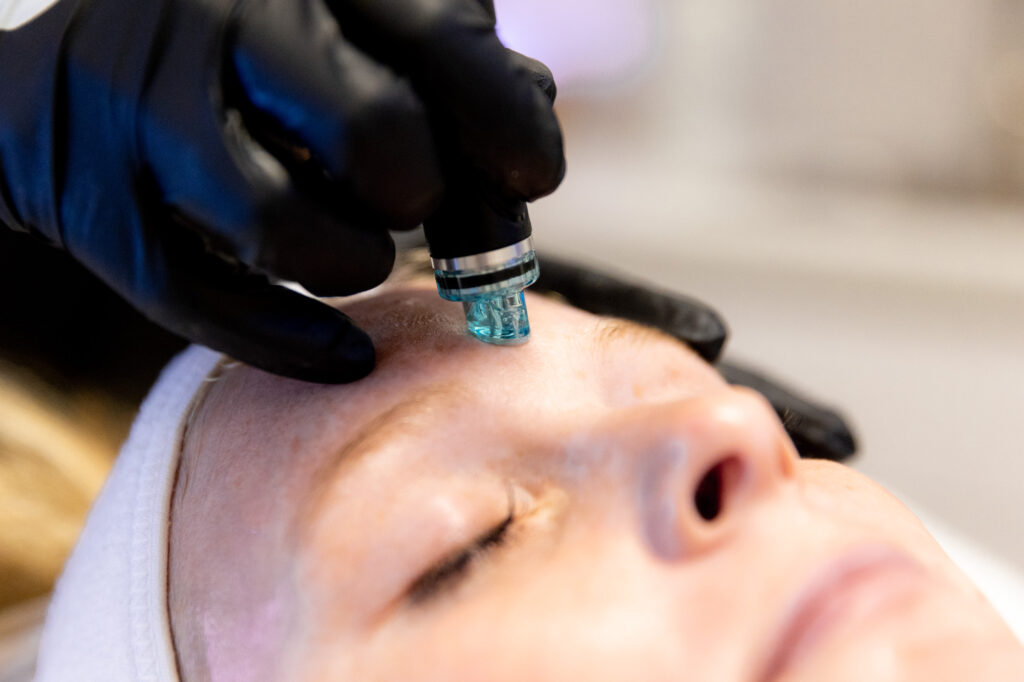
Traditional microneedling and RF microneedling both create controlled microchannels to stimulate a healing and collagen-remodeling response. RF microneedling adds radiofrequency energy through or near the needles, creating targeted heat below the surface. At Renova Aesthetics in Carmel, Indiana, traditional microneedling may be selected for collagen induction and texture concerns when added heat is unnecessary, while RF microneedling may be chosen when the plan calls for deeper thermal remodeling, especially for laxity, scars, stretch marks, or more advanced texture concerns. RF is not automatically better. The right choice depends on the concern, anatomy, device, skin history, and risk profile.
RF vs traditional microneedling in one sentence
Traditional microneedling uses sterile needles to create controlled mechanical injury. RF microneedling does that and adds radiofrequency heat at selected depths.
That extra energy changes both what the treatment can target and how carefully it needs to be planned. If you are searching for microneedling near me, the most important question is not simply whether a clinic offers microneedling. It is which type, which device, who performs it, and why that approach fits your skin.
Renova Aesthetics is a physician-led medical aesthetics clinic in Carmel, Indiana that offers both traditional microneedling and advanced RF microneedling. The team uses consultation, clinical examination, and technology such as VISIA skin analysis when appropriate to build individualized treatment plans.
What is traditional microneedling?
Traditional microneedling, also called collagen induction therapy, uses a sterile device with small needles that repeatedly enter and exit the skin at controlled depths. The tiny channels trigger a wound-healing response that can stimulate collagen and elastin remodeling.
Microneedling is commonly discussed for the appearance of acne scars, fine lines, wrinkles, and uneven texture. The U.S. Food and Drug Administration has authorized specific microneedling devices for certain uses, including improving the appearance of facial acne scars and wrinkles in adults. Authorization is device-specific, so the exact device and indication matter.
Traditional microneedling does not deliver radiofrequency energy. Its effect comes primarily from the controlled mechanical injury created by the needles.
What is RF microneedling?
RF microneedling combines needle penetration with radiofrequency energy. Once the needles are positioned at a selected depth, the device delivers electrical energy that creates controlled heat in targeted tissue.
The goal is to combine the collagen-induction response from microneedling with thermal remodeling below the surface. Renova uses RF microneedling for concerns that include fine lines and wrinkles, scarring, skin laxity, enlarged-looking pores, acne scars, and stretch marks.
RF microneedling is a medical procedure. Needle depth, RF energy, pulse duration, number of passes, anatomy, and the amount of tissue beneath the skin all affect treatment. That is why the same settings should not be used automatically on every client or every area.
RF microneedling vs traditional microneedling: quick comparison
| Question | Traditional microneedling | RF microneedling |
| Energy source | Mechanical needle injury only. | Mechanical needle injury plus radiofrequency heat. |
| Primary goal | Collagen induction and texture remodeling. | Collagen induction plus targeted thermal remodeling. |
| Common concerns | Texture, fine lines, selected acne scars, overall skin quality. | Texture, acne scars, mild laxity, stretch marks, selected deeper remodeling goals. |
| Customization | Needle depth, passes, device settings. | Needle depth, RF energy, pulse parameters, passes, device settings. |
| Recovery | Redness, tenderness, dryness, pinpoint bleeding or peeling can occur. | Similar surface effects may occur, with swelling and heat-related sensitivity also possible. |
| Risk profile | Procedure-related risks include infection, pigment change, scarring, and irritation. | Includes microneedling risks plus heat-related risks; FDA has reported serious complications with certain uses. |
Is RF microneedling stronger than regular microneedling?
It is more accurate to say RF microneedling adds another treatment mechanism. The radiofrequency energy can create controlled thermal zones below the surface that traditional microneedling does not create.
That can be useful when a provider wants deeper remodeling, but “stronger” is not always the goal. A client seeking general texture improvement may not need added thermal energy. Someone with mild laxity or a scar pattern that benefits from deeper treatment may be a better RF candidate.
Treatment should be matched to the problem, not ranked by intensity. More heat, more depth, or more passes do not automatically produce a better result.
Which is better for acne scars?
Both traditional and RF microneedling can be considered for selected acne-scar concerns, but acne scars are not one condition. Rolling, boxcar, and ice-pick scars differ in shape and depth, and tethered scars may require techniques beyond microneedling.
RF microneedling is often chosen when a provider wants to combine needle-based remodeling with controlled heat at depth. Traditional microneedling may still be appropriate for milder texture changes or when avoiding RF energy is preferable.
Red or brown marks left after acne are also different from indented scars. Pigment, vascular redness, active acne, and true scar depressions may require different treatments. Renova may use VISIA and standardized photography to separate these concerns and track progress.
Which is better for skin laxity?
RF microneedling is generally the more relevant of the two when mild skin laxity is a primary goal because the RF component adds controlled tissue heating. Renova specifically lists skin laxity among the concerns treated with its RF microneedling technologies.
Traditional microneedling can support collagen remodeling and overall skin quality, but it does not create the same thermal effect. For clients whose main concern is firmness rather than surface texture, the provider may discuss RF microneedling or another skin-tightening technology instead.
Neither treatment can reproduce a surgical lift. Significant skin redundancy requires a realistic conversation about what non-surgical treatment can and cannot change.
Which is better for pores and texture?
Either may be considered depending on the cause and severity of the texture concern. Traditional microneedling can support collagen remodeling around pores and uneven texture without adding heat. RF microneedling may be selected when texture is combined with laxity or deeper scarring.
Pores are also influenced by oil production, genetics, congestion, and sun damage. No procedure permanently “closes” pores. The goal is to improve their appearance and the surrounding skin support.
What is the downtime difference?
Both procedures intentionally create a controlled injury, so neither should be treated like a no-downtime facial. Redness, tenderness, tightness, dryness, pinpoint bleeding, roughness, or peeling can occur after traditional microneedling.
RF microneedling can produce similar effects plus swelling, warmth, or heat-related sensitivity. Renova advises giving RF-treated skin several days to a week to complete the early healing process, with sun avoidance, gentle skincare, and no harsh exfoliation during recovery.
Actual downtime depends on the device, needle depth, energy, number of passes, treatment area, skin sensitivity, and individual healing. Schedule a first treatment with a recovery buffer before travel, formal events, or important photos.
Does RF microneedling hurt more?
Comfort varies. Both procedures are commonly performed with topical anesthetic when appropriate. RF adds energy below the surface, so some clients describe more heat or deeper sensation during treatment.
Pain is not a measure of effectiveness. A well-designed treatment should use the settings needed for the goal while protecting the tissue. Tell your provider if you feel unexpected sharp pain, intense heat, or discomfort that changes suddenly during treatment.
Can PDGF be used with microneedling?
Renova may incorporate a topical PDGF concentrate after traditional or RF microneedling as part of a provider-directed regenerative protocol. The PDGF is applied topically after the procedure rather than injected in the context discussed here.
Microneedling creates temporary channels in the skin, which is one reason clinicians are interested in post-procedure topical adjuncts. However, the FDA notes that it has not cleared microneedling devices specifically for use with another drug, cosmetic, platelet-rich plasma product, or other topical product. That makes product selection, sterility, timing, and provider guidance important.
Do not apply a random serum or growth-factor product to freshly microneedled skin. Use only the post-care products your treating provider approves.
Is RF microneedling safe?
In October 2025, the FDA issued a safety communication after receiving reports of serious complications associated with certain uses of RF microneedling. Reported events included burns, scarring, fat loss, disfigurement, nerve damage, and the need for medical or surgical intervention.
The FDA advises patients to seek care from a licensed health care provider with training and experience in RF microneedling, ask which device will be used, and avoid home RF microneedling devices.
The communication does not mean every RF treatment is unsafe. It does mean the treatment deserves medical-level screening and precise technique. Areas with thin tissue, limited subcutaneous fat, prior filler, prior surgery, or complex anatomy require thoughtful planning.
Traditional microneedling also has risks. The FDA lists possible effects such as bleeding, bruising, redness, tightness, itching, peeling, pigment changes, infection, and cold-sore flare. Device hygiene and sterile technique are essential.
Who should avoid or postpone microneedling?
Candidacy depends on the device and medical history. Treatment may need to be delayed for active infection, open wounds, severe inflammatory acne in the treatment area, recent tanning, impaired healing, certain immune conditions, pregnancy, problematic scarring history, or medications that affect healing or bleeding.
RF devices may have additional restrictions related to implanted electronic devices or other hardware. Always disclose prior filler, threads, surgery, energy treatments, and any numbness or altered sensation in the area.
How many sessions will I need?
Both types of microneedling are usually planned as a series when the goal is meaningful collagen remodeling. The exact number depends on the concern, treatment intensity, scar depth, laxity, response, and how much time the skin needs between sessions.
Renova’s RF microneedling treatment information describes multi-session plans and adequate spacing for healing. Traditional microneedling schedules are also individualized. Results develop over weeks to months because collagen remodeling continues after visible redness has resolved.
How do I choose between RF and traditional microneedling?
Choose based on the concern and risk profile, not on which treatment sounds more advanced.
Traditional microneedling may make sense when the goal is collagen induction, texture refinement, or selected scar improvement and the provider does not believe added heat is necessary. RF microneedling may make sense when mild laxity, deeper texture, stretch marks, or a scar pattern calls for controlled thermal remodeling.
Renova Aesthetics in Carmel, Indiana uses a physician-led model, individualized consultation, ongoing advanced training, and objective skin assessment when appropriate. The team can also determine when a laser, light treatment, topical regenerative adjunct, or another modality is a better fit than either form of microneedling.
The best microneedling treatment is the one matched to your skin
A search for microneedling near me can return treatments that share a name but differ substantially in device, depth, energy, training requirements, and risk. Traditional microneedling and RF microneedling are related, but they are not interchangeable.
If you are deciding between them, Renova Aesthetics in Carmel, IN can evaluate your texture, scars, laxity, skin history, downtime preferences, and prior procedures and explain why one approach fits your goals better. The aim is a precise treatment plan, not the most aggressive device.
Frequently asked questions
What is the main difference between RF microneedling and traditional microneedling?
Traditional microneedling creates controlled microchannels using needles alone. RF microneedling adds radiofrequency energy through or near the needles to create targeted heat below the skin surface.
Is RF microneedling better than regular microneedling?
Not automatically. RF may be more appropriate when mild laxity, deeper texture, scars, or stretch marks call for thermal remodeling. Traditional microneedling may be a better fit when collagen induction and texture improvement are the goal without added heat.
Which microneedling is better for acne scars?
Both may help selected acne scars. The best option depends on scar type and depth. RF microneedling may be chosen for deeper targeted remodeling, while traditional microneedling may suit milder texture concerns. Some scars require other techniques.
Does RF microneedling have more downtime?
Both treatments can cause redness, tenderness, dryness, roughness, or peeling. RF microneedling can also cause swelling and heat-related sensitivity. Downtime depends on the device, depth, energy, treatment area, and individual healing.
Can topical PDGF be applied after microneedling?
Renova may use a provider-directed topical PDGF concentrate after traditional or RF microneedling. In this context it is applied topically, not injected. Only products approved by the treating provider should be used on freshly microneedled skin.
Where can I find RF and traditional microneedling near Carmel, Indiana?
Renova Aesthetics in Carmel, Indiana offers traditional microneedling and advanced RF microneedling. A consultation can determine which approach best matches your texture, scarring, laxity, skin history, and recovery preferences.